
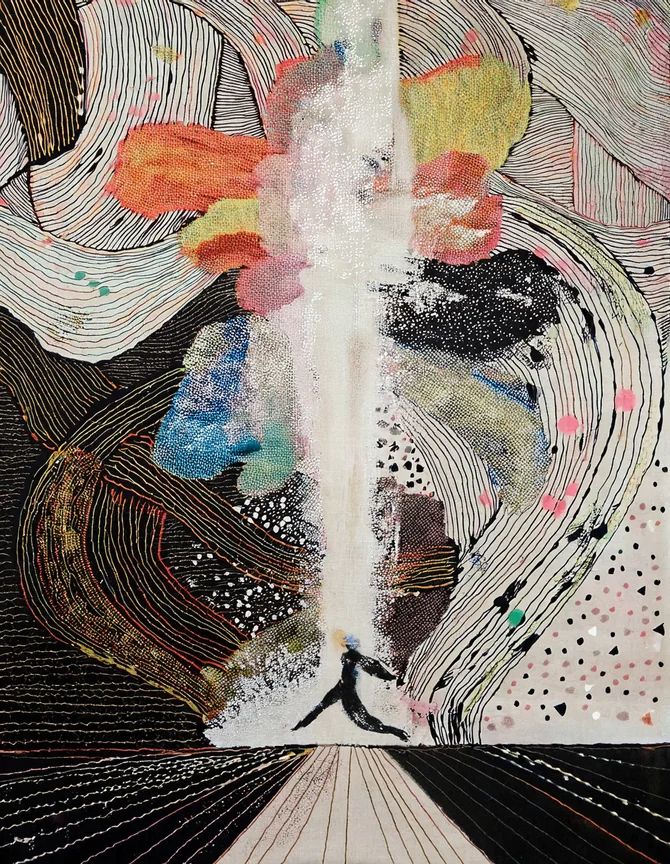
Hexagram 25 · 無妄 Wú Wàng
The Innocence
Thunder within · Heaven without
This is a matter of innocence — spontaneous, uncalculated action, true to one's nature and thereby in accord with heaven. The figure is favorable but conditional and sharp-edged: "supreme success; perseverance furthers; but if someone is not as he should be, he has misfortune, and it does not further him to undertake anything." Innocence succeeds — but only real innocence; deviate from your true nature, and undertaking anything goes wrong. The line texts trace it: innocent behavior brings good fortune (line 1); acting without counting on the harvest while plowing — uncalculated action — furthers (line 2); undeserved misfortune sometimes strikes the innocent, the tethered cow taken by a passing stranger (line 3); holding firm to one's true nature is blameless (line 4); an affliction incurred through no fault of one's own needs no forced medicine — it passes of itself (line 5); and innocent action at the wrong time, at the top when one should not move, brings misfortune (line 6). To be innocent rightly is to act from one's true nature without calculation — and to know when innocence means not acting.
- Inner · Outer
- ☳ Thunder · ☰ Heaven
- Hands
- Courage · Evolution
- Turned view
- 26 The Great Restraint
- Complement
- 46 The Upward Growth
- Nuclear
- 53 The Patient Advance
This figure has thirteen parts. Six are always open here; one more opens each week.
About 950 of its 3100 words
- 01The Figure
- 02The ForcesIn the full figure
- 03The BodyIn the full figure
- 04The Situation
- 05The Interval
- 06The Family FieldIn the full figure
- 07The Facing FiguresIn the full figure
- 08Calibration
- 09The Arena Question
- 10Weather
- 11The Unhanding NoteIn the full figure
- 12The Six Lines
- 13Source NotesIn the full figure
05 · The Interval
The interval here is crossed by spontaneous action true to one's nature — the gap between what is and what could be is bridged not by scheming but by acting from one's genuine nature, uncalculated and unforced, in accord with the higher order. The task is genuineness and right timing: to act without counting the reward, to hold firm to one's true nature, to not force a remedy on what is not one's to fix, and to know when innocence requires not moving. What crosses this interval is the uncontrived act, true to nature and rightly timed.
08 · Calibration
Deficiency
the calculation
Acting from scheme and ulterior motive rather than true nature — the contrived, self-serving action the figure warns against (“if someone is not as he should be, he has misfortune”). Innocence faked, or abandoned for calculation.
Alignment
the innocence
The uncalculated act true to one's nature: innocent behavior (line 1), action that does not count the reward (line 2), firm holding to one's nature (line 4), non-interference with what is not one's to fix (line 5), and the wisdom to not act when action is wrong (line 6).
Excess
the ill-timed innocence, or
the forced remedy Acting “innocently” at the wrong moment — moving when one should be still (line 6) — or forcing a remedy on what is not one's to fix (line 5, using medicine on an affliction that would pass of itself). Spontaneity overrunning its right time and place.
Which way it tends. Toward the calculated or the ill-timed: either the action is contrived and self-serving or innocent-but-wrongly-timed (moving when one should be still, forcing what should pass of itself). Toward the innocence: the act arises spontaneously from one's true nature, uncalculated and rightly timed, in accord with the higher.
09 · The Arena Question
Its arena question is about the source and timing of your Am I acting from my true nature here — uncalculated and rightly timed — or from scheme, or innocently at a moment when I should not move at all?
Arenas reward calculation, and the figure counsels the opposite — but demandingly. Its arena question is about the source and timing of your Am I acting from my true nature here — uncalculated and rightly timed — or from scheme, or innocently at a moment when I should not move at all? action: does it arise from your genuine nature, without ulterior motive or counting of the reward — and do you know when innocence means restraint, not moving when you should be still, not forcing a remedy on what is not yours? The costly errors are the calculated act and the ill-timed innocent one. Ask whether your action is truly uncontrived, and whether this is a moment for it at all.
10 · WeatherOpen this week
A part from the full figure, open to everyone this week. The same figure reads differently depending on the weather you cast it in.
Dark night
innocence in a dark time is where the undeserved misfortune of the blameless is felt (line 3, the cow taken by a passing stranger): the innocent are not exempt from the dark. The counsel — hold firm to your true nature even when it is not rewarded, and do not abandon innocence for calculation because the night is hard. The dark-night wisdom is genuineness that persists unrewarded.
Bright day
the true nature and the right time both clearly seen: the best weather for the spontaneous, uncalculated act (line 2) that flows from a genuine source. The way to act innocently is visible; act from your nature without scheming. The danger is only the bright-day impulse to move when stillness is called for (line 6).
Mundane day
the ordinary, daily practice of acting genuinely — the uncontrived responses, the unschemed choices, the small honesties of a life. The figure's true home — most innocence is quiet, unremarkable, and simply a matter of acting from one's real nature rather than one's calculation.
12 · The Six Lines
One arc: innocence from the innocent first act, through the uncalculated plowing, the undeserved misfortune, and the firm holding to nature, to the remedy withheld and the innocent act that comes too late. Read as the uncontrived act, true to nature and rightly timed. (The ruler is line 5.) Each line, when it moves, carries the figure somewhere else.
Line 1becomes 12 The Standstill →
Innocent behavior brings good fortune.
At the start, plainly: "innocent behavior brings good fortune." Action that arises spontaneously from one's true nature, uncalculated and sincere, is fortunate from the outset — the genuine first move, made without scheming, carries its own good.
Innocence at the beginning is simply acting as one truly is. The counsel: act from your genuine nature at the outset, without scheming — the spontaneous, sincere first
The full reading of this line · about 120 words
Line 2becomes 10 The Careful Treading →
If one does not count on the harvest while plowing, nor on the use of the ground while clearing it, it furthers one to undertake something.
At the center, the pure form of innocent action: "if one does not count on the harvest while plowing, nor on the use of the ground while clearing it" — one does the work for its own sake, without fixating on the reward, without calculating the payoff.
This uncalculated action, done from the doing and not the getting, is what "furthers one to undertake something." Innocence is action released from its reward. The counsel: do
The full reading of this line · about 140 words
Line 3becomes 13 The Open Fellowship →
Undeserved misfortune. The cow that was tethered by someone is the wanderer's gain, the citizen's loss.
A hard truth about innocence: "undeserved misfortune." The image — a cow someone tethered is led off by a passing wanderer, and "is the wanderer's gain, the citizen's loss" — the townsman loses through no fault of his own, to a stranger's chance.
Innocence does not exempt one from undeserved calamity; the blameless are sometimes struck by mere chance and another's opportunism. The counsel: innocence does not shield you from undeserved
The full reading of this line · about 140 words
Line 4becomes 42 The Enriching →
He who can be persevering remains without blame.
Here the counsel is simply to hold: "he who can be persevering remains without blame." Amid the pressures to deviate — to calculate, to abandon one's nature — the one who perseveres in genuine innocence, keeping firm to his true nature, stays blameless.
Innocence is not only spontaneous but steadfast; it must be held against the temptation to scheme. The counsel: hold firm to your true nature against every pressure to
The full reading of this line · about 120 words
Line 5becomes 21 The Biting Through →
Use no medicine in an illness incurred through no fault of your own. It will pass of itself.
The ruling line, and innocence's deepest wisdom: "use no medicine in an illness incurred through no fault of your own; it will pass of itself." When trouble comes that you did not cause and is not yours to fix, do not force a remedy — the contriving intervention would only interfere with a thing that will resolve on its own.
Innocence includes the restraint of non-interference: trusting the natural course, not meddling with what is not yours. The counsel: do not force a remedy on trouble you did
The full reading of this line · about 150 words
Line 6becomes 17 The Following →
Innocent action brings misfortune. Nothing furthers.
At the summit, the figure's sharpest turn: "innocent action brings misfortune.
Nothing furthers." Even genuinely innocent action, taken at the wrong time — at the top, when the situation calls for stillness, when one has gone as far as
The full reading of this line · about 150 words
Also in this figure
Where it lives in your body, who it moves with, and the trap it sets.

The Changes · Mikono Tisa
Sixty-four figures. Every part, every line, every painting.
730 pages · 64 original paintings · the Nine Hands mapped onto the eight trigrams · no verdicts, only trajectories.
The reading room
$5 / month
or $45 a year. The whole book online, every figure in full, 20% off readings.
Opening soon — join the letters to hear first.
The book
$50
The illustrated digital edition to keep, with three months of the reading room.
Opening soon — join the letters to hear first.
Want this figure read for your situation? Book a reading with Nathaniel